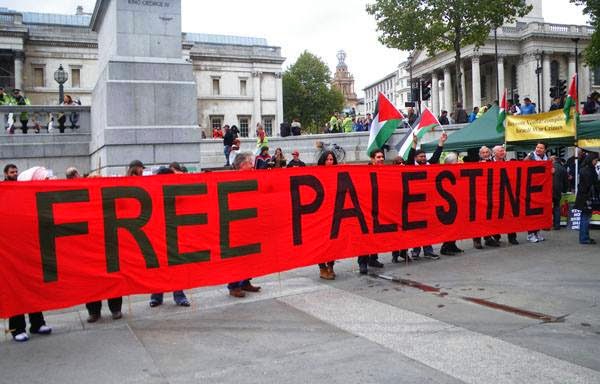
Free Palestine

Free Palestine

Wednesday, November 06, 2013

ELEPHANT SLAUGHTER IN TANZANIA AT MONSTROUS SCALE


“China is deeply implicated in the wave of killing of elephants owing to its million dollar trade in ivory products. A recent report affirmed that at the current rate of 30 elephants killed every day and 850 elephants shot every month, there is an unprecedented risk of the country’s elephant population perishing in the next seven years.”
— Tanzania Elephant Protection Society

Elephants slaughter in Tanzania a daily occurrence / EIA (p)
At a time when poaching has tremendously scaled up in Tanzania, about 706 pieces of ivory, representing more than 200 tuskers killed, were found last week in Dar es Salam Mikocheni area at a residence of Chinese nationals.
The incredulous catch was hidden in a manner that needed informed intelligence to uncover as shells of snails mixed with garlic to fool any suspicious minds sniffing about the ivory. Even the minister for Natural Resources and Tourism, Khamis Kagasheki, and police officers at the scene were so stunned with the ingenuity of the residents, evidently agents of Far East ivory traders.
A detailed report made available to The Guardian on Sunday in past months says China is deeply implicated in the wave of killing of elephants owing to its million dollar trade in ivory products. The report authored by the Tanzania Elephant Protection Society (TEPS) said rising economic relations between China and Tanzania fuel elephant killings in the country, calling for proper government intervention.
The document underlined that though the Chinese investments were important in the country's economy and development, this shouldn't compromise the country's natural wildlife conservation efforts.
The report affirmed that at the current rate of 30 elephants killed every day and 850 elephants shot every month, there is an unprecedented risk of the country's elephant population perishing in the next seven years.
"China is the number one investor in Tanzania... but the majority of tusks exported illegally from Tanzania end up in China due to the huge demand for ivory in China," it said, noting that Tanzania's partnership with China risks being at the expense of Tanzania's vital natural resources and the tourist industry.
This requires political will and strong leadership to resolve, it said, recommending that the Tanzania government "should make investment from China and other countries strictly conditional on China tackling its demand for ivory at home, and stronger law enforcement collaboration to halt the flow of ivory from Tanzania to China."
Three Chinese, Che JinzhanXu Fujie and Huang Qin, are said to use a special Noah microbus with registration number T713 BXG to transport the ivory pieces to the house.
Until this paper left the house more than 1800 kilogram of ivory pieces were found, although the police were not yet finished with counting.
Inside the house police found a weighing unit that the Chinese used in their illegal business, a number of fresh garlic onions and sacks of shells which were mixed with the ivory during transportation.
Interviewed, the Chinese said that the ivory business is owned by their friends and what they were doing was only the garlic business.
Huang Qin explaining that his friends are the one who used to bring the ivory in their home. He admitted that it is illegal business and if it was in their country they would be executed.
The bus that was used to bring the product to the house used different numbers; during the day it used the plate number is T713 BXG but at night the number was twisted with plate number T 317 BXG.
According to the information released from the ivory storehouse, the minibus was used to conduct the operation at midnight, specifically from 1:00 am.
Briefing the media at the event, minister Kagasheki said they managed to find the ivory as a follow up to Operation Tokomeza against gangs hunting elephants with automatic rifles, all over the country.
Ambassador Kagasheki said the fight against poachers would not be achieved by suspending public officials but by joining efforts with all stakeholders, including MPs to fight the scourge.
The ivory pieces found last week represent a large amount as elephants are steadily diminished, he said, underlining that stopping Operation Tokomeza as MPs are proposing, would see elephants cleared out from game parks in a few years.

Saturday, September 21, 2013

VIDEOS AND PICTURES: SHOOTING AT WESTGATE MALL IN NAIROBI, KENYA, WHILE FULL OF SHOPPERS

The Westgate Mall in Nairobi, Kenya on Saturday, Sept. 21 2013, after gunmen threw grenades and opened fire on the centre when it was full of shoppers.

Some of the videos on WestGate Shooting on 2013.09.21


Local security officials said the violence broke out after gunmen threw hand grenades inside the Westgate Mall in Nairobi on Saturday. 

Witnesses say gunfire broke out inside the mall and spread outside after police arrived to confront the assailants. Some witnesses who fled the mall say the attack may have been a failed bank robbery attempt. 

However, Nairobi police chief, Benson Kibue, said the attackers had been trying to rob a shop within the mall when the shooting began. 

Ministry of Interior and Coordination of National Government said in a statement that security forces and law enforcement agencies were trying to ensure safety of those people who still remained trapped in the mall. 

"We're doing our job to ensure that everyone is evacuated to safety. This is a scene of crime." the statement added.

The Westgate Mall is located in Nairobi’s wealthy Westlands area and is frequently visited by rich Kenyans and expatriates. 


Some Picture


A gun battle inside a shopping centre in the Kenyan capital Nairobi has left at least 20 people dead, the Kenyan Red Cross says.
The gunmen attacked the Westgate centre - one of the city's most exclusive. Dozens of shoppers fled; many are still feared trapped inside.
A senior police officer originally said it was an attempted robbery but later called it a possible terrorist attack.
The Somali militant group al-Shabab had threatened to strike the centre.

Start Quote

I could hear a continuous exchange of fire and a few loud explosions”
Suresh Kumar
It is opposed to Kenya sending troops to fight in Somalia. No group has said it carried out Saturday's attack.
Officers have now surrounded the building in an attempt to evacuate remaining shoppers. A military helicopter has landed nearby.
Police told AFP news agency that gunmen had taken at least seven people hostage. Eyewitnesses have also said there are hostages, but there is no official confirmation.
Dozens of people are reported to have been injured.
Eyewitnesses say masked attackers threw grenades into the building at about midday local time (09:00 GMT).


Nairobi police chief Benson Kibue initially said the gunmen had been trying to rob a shop, but later called it "a terrorist attack".
At about 15:30 GMT, more than six hours after the attack began, the Kenyan Secretary for the Interior Joseph ole Lenku said the security situation was "under control".
He urged the public "not to speculate" about the nature of the attack, and said most people had been evacuated.


The BBC's Anne Soy, who is at the scene, said there are reports one of the gunmen has been shot dead.
Some of the attackers were reportedly dressed in hijabs, and it is unclear whether they were men or women, our correspondent says.
One man who escaped had been hiding in a supermarket but told our correspondent his friends were still trapped inside the building.
Witnesses told news agencies the gunmen ordered Muslims to leave and that non-Muslims would be targeted.
The Kenyan authorities have asked media outlets to stop broadcasting from the scene, as the information may be aiding the attackers.
Arjen Westra, who was drinking coffee at the time of the attack, told the BBC he thought the cafe he was in was being targeted by the gunmen.
"I could hear the gunfire moving towards the main entrance of the shopping mall, so some people ran out of our cafe in a kind of panic, and quite a number just fell down as flat as possible on the ground."


Security guards used shopping trolleys to wheel out several wounded children and at least one man, AP reports.
"The gunmen tried to fire at my head but missed. There are definitely many casualties," Sudjar Singh, who works at the shopping centre, told AFP.
"I saw three of the attackers dressed in black and with covered faces and they were carrying heavy rifles," said another witness.
AFP quoted witnesses as saying the gunmen were speaking Arabic or Somali and executed shoppers.
One Nairobi resident, Anupa, who lives near the scene, told the BBC: "I heard the exchange of fire when it happened, and I heard what I thought was a grenade, but I didn't go outside. The whole area is cordoned off."
Armed police took cover behind vehicles outside. "We have officers at the scene trying to get out the group shooting inside," a police official told AFP news agency.
"Officers are approaching the situation with caution because there are innocent civilians inside," he said.
The Westgate centre is often frequented by wealthy Kenyans and expatriates. Police have urged residents to stay away from the area and told media outlets to stop live transmissions from the scene.


Source: BBC, PRESSTV, CNN, THE TELEGRAPH, METRO, YOUTUBE

Wednesday, September 11, 2013

Meli ya Kitanzania iliyokamatwa na Madawa ya Kulevya - Italy


The Tanzanian-registered cargo ship MV Gold Star, loaded with an estimated 30 tons of cannabis, caught fire on Friday 6 September while in international waters 30 nautical miles north of Malta.
The cargo volume estimate comes from Italy’s Guardia di Finanzia, however very little data appears to exist to support the estimate of 30 tons. At first glance, it seems quite possible that the crew on board the vessel deliberately set fire to the cargo to avoid apprehension, and there’s no apparent reason why the crew would have admitted to have been transporting 30 tons of weed.
Upon receipt of the emergency call from the vessel on Friday, an armada of vessels were dispatched by the Armed Forces of Malta (AFM) to help subdue, or perhaps just hangout downwind, of the flames which had spread to the Gold Star’s bridge.  The 9 members of the ship’s crew were rescued by AFM assets.

Friday, August 16, 2013

COMMEMORATING YAUM E GHAM : 8TH SHAWWAL, WEDNESDAY, IN THE YEAR 1345 AH, (APRIL 21ST 1925) THE MAUSOLEUMS IN JANNATUL-BAQEE’ IN MADINA WERE DEMOLISHED BY KING IBN SAUD.

Yaum-e Gham, Persian for "Day of Sorrow", is a day commemorated by Shia Muslims, as the day that Jannatul Baqi, the Baqi Cemetery, was destroyed by the Saudi Arabia in 1925.

JANNATUL BAQI (BEFORE)

Literally “al-Baqee” means a tree garden. It is also known as Jannatul-Baqee’ due to its sanctity, since in it are buried many of our Prophet (saww)’s relatives and companions. The first companion of the Holy Prophet (saww) to be buried there was ‘Uthman bin Ma’dhoon. He died on 3rd Sha’ban 3 AH. The Holy Prophet (saww) ordered certain trees to be felled, and in its midst, he buried his dear companion, placing two stones over the grave. Ebrahim, the son of the Holy Prophet (saww) who died later and over whom the Holy Prophet (saww) bitterly wept, was also buried there. The people of Madina then began to use the site for the burial of their own dead because the Holy Prophet (saww) used to greet those who were buried in Jannatul-Baqee’ saying: “Peace be upon you, O abode of the faithful! God willing, we should soon join you. O Allah! Forgive the fellows of al-Baqee’”. 


The burial site was later expanded at al-Baqee’. Nearly seven thousand of the Holy Prophet (saww)’s companions were buried there and many of his family members including the Ahlul-Bayt (as) praised in the Holy Quran. They are Sayyida Fatima (as) –the beloved daughter of the Holy Prophet (saww), Imam al-Hasan (as), Imam ‘Ali ibn al-Husayn (as), Imam Muhammad al-Baqir (as) and Imam Ja’ffar al-Sadiq (as). Other relatives include: Safiyya and Aatika (his aunts); Fatima bint Asad (his aunt and mother of Imam ‘Ali); ‘Uthaman bin ‘Affaan, the third caliph of the Muslims was initially buried outside al-Baqee’ but later on, due to expansion of the burial ground, his grave was included in the area. In later years, great Muslim scholars like Malik bin Anas and many others were buried there too. Thus al-Baqee’ became a well-known place of great significance to all Muslims. Ibn Batuta, the famous traveller has said, “At al-Baqee are the graves of numerous Muhajireen and Ansaar and many companions of the Holy Prophet (saww), except that most of their names are unknown”.

On 8th Shawwal, Wednesday, in the year 1345 AH, (April 21st 1925) the mausoleums in Jannatul-Baqee’ in Madina were demolished by King Ibn Saud. In the same year, he also demolished the tombs of holy personages at Jannatul-Mu’alla where the Holy Prophet (saww)’s mother, wife, grandfather and other ancestors are buried. This day is indeed a great day of grief and sorrow for all Muslims.