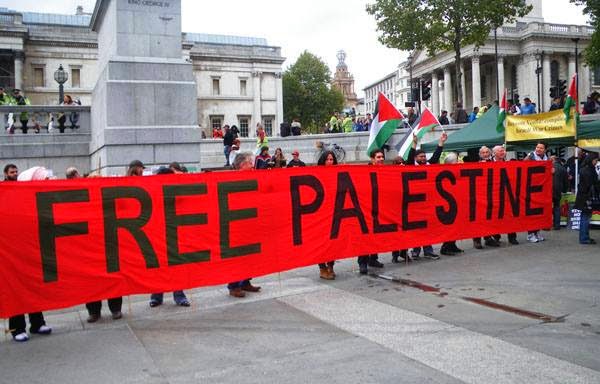
Free Palestine

Free Palestine

Monday, October 15, 2012

AUSTRIAN SKYDIVER BAUMGARTNER FIRST MAN TO BREAK SOUND BARRIER

Pilot Felix Baumgartner of Austria steps into a capsule during the manned flight in Roswell, New Mexico, USA on October 14, 2012.


Austrian daredevil Felix Baumgartner has become the first human to break the sound barrier by a freefall jump from the edge of space.

Baumgartner, 43, leaped off a capsule more than 39 kilometers above the earth with his speed reaching 834 miles (about 1,342 kilometers) per hour, or 1.24 times the speed of sound, on Sunday. 

He jumped from an altitude of 39,045 meters and landed in the New Mexico desert which took four minutes and 19 seconds. 

“I think 20 tons have fallen from my shoulders. I prepared for this for seven years,” AFP quoted Baumgartner as saying. 

The Austrian also talked about a helmet problem which almost forced him to abort the jump. 


“Even on a day like this when you start so well, then there's a little glitch. And you think you'll have to abort -- what if you've prepared everything and it fails on a visor problem. But I finally decided to jump. And it was the right decision,” He said. 

By getting up to the jump height, which took Baumgartner more than two hours, he managed to break the record of the highest altitude for a manned balloon flight which was nearly 35 kilometers, set in 1961. 

“When you're standing there on top of the world you become so humble ... The only thing is you want to come back alive ... I know the whole world is all watching now and I wish you could see what I see... Sometimes you have to go up really high to understand how small you are,” Baumgartner said.
He holds some other records such as BASE jumps from the Petronas Towers in Kuala Lumpur and the Christ the Redeemer statue in Rio de Janeiro, Brazil. 

Sunday, October 14, 2012

EUTELSAT SET TO TAKE IRAN SATELLITE CHANNELS OFF AIR


European satellite provider Eutelsat SA is set to pull the plug on several satellite channels and radio stations broadcast from Iran.

The company has ordered media services company, Arqiva, to take the Iranian satellite channels off one of its Hot Bird frequencies. 

The Iranian channels being taken off the air include Press TV, al-Alam, Jam-e-Jam 1 and 2, Sahar 1 and 2, Islamic Republic of Iran News Network, Quran TV, and the Arabic-language al-Kawthar. 

The ban will also affect the satellite broadcast of several Iranian radio stations. 

The move follows months of jamming of Iranian channels by European satellite companies. It also shows that the European Union does not respect freedom of speech, and spares no efforts to silence the voice of alternative media outlets. 

Iranian news channels affected by the decision only aimed to break the West’s monopoly on news broadcast by reflecting the voice of the oppressed people to the world. 

The illegal move by Eutelsat SA, therefore, is a step to mute all alternative news outlets representing the voice of the voiceless. 

The Iranian channels, however, reserve the right to take legal action against Eutelsat’s decision in order to restore their rights and compensate for any material and spiritual damages thereof to the full extent possible under international law.

TODAY WE REMEMBER FATHER OF OUR NATION (UNITED REPUBLIC OF TANZANIA) LATE MWALIMU JULIUS KAMBARAGE NYERERE


One of Africa’s most respected figures, Julius Nyerere (1922 — 1999) was a politician of principle and intelligence. Known as Mwalimu or teacher he had a vision of education that was rich with possibility


Julius Kambarage Nyerere was born on April 13, 1922 in Butiama, on the eastern shore of lake Victoria in north west Tanganyika. His father was the chief of the small Zanaki tribe. He was 12 before he started school (he had to walk 26 miles to Musoma to do so). Later, he transferred for his secondary education to the Tabora Government Secondary School. His intelligence was quickly recognized by the Roman Catholic fathers who taught him. He went on, with their help, to train as a teacher at Makerere University in Kampala (Uganda). On gaining his Certificate, he taught for three years and then went on a government scholarship to study history and political economy for his Master of Arts at the University of Edinburgh (he was the first Tanzanian to study at a British university and only the second to gain a university degree outside Africa. In Edinburgh, partly through his encounter with Fabian thinking, Nyerere began to develop his particular vision of connecting socialism with African communal living.

On his return to Tanganyika, Nyerere was forced by the colonial authorities to make a choice between his political activities and his teaching. He was reported as saying that he was a schoolmaster by choice and a politician by accident. Working to bring a number of different nationalist factions into one grouping he achieved this in 1954 with the formation of TANU (the Tanganyika African National Union). He became President of the Union (a post he held until 1977), entered the Legislative Council in 1958 and became chief minister in 1960. A year later Tanganyika was granted internal self-government and Nyerere became premier. Full independence came in December 1961 and he was elected President in 1962.

Nyerere’s integrity, ability as a political orator and organizer, and readiness to work with different groupings was a significant factor in independence being achieved without bloodshed. In this he was helped by the co-operative attitude of the last British governor — Sir Richard Turnbull. In 1964, following a coup in Zanzibar (and an attempted coup in Tanganyika itself) Nyerere negotiated with the new leaders in Zanzibar and agreed to absorb them into the union government. The result was the creation of the Republic of Tanzania.


Ujamma, socialism and self reliance

As President, Nyerere had to steer a difficult course. By the late 1960s Tanzania was one of the world’s poorest countries. Like many others it was suffering from a severe foreign debt burden, a decrease in foreign aid, and a fall in the price of commodities. His solution, the collectivization of agriculture, villigization (see Ujamma below) and large-scale nationalization was a unique blend of socialism and communal life. The vision was set out in the Arusha Declaration of 1967 (reprinted in Nyerere 1968):

"The objective of socialism in the United Republic of Tanzania is to build a society in which all members have equal rights and equal opportunities; in which all can live in peace with their neighbours without suffering or imposing injustice, being exploited, or exploiting; and in which all have a gradually increasing basic level of material welfare before any individual lives in luxury." (Nyerere 1968: 340)

The focus, given the nature of Tanzanian society, was on rural development. People were encouraged (sometimes forced) to live and work on a co-operative basis in organized villages or ujamaa (meaning ‘familyhood’ in Kishwahili). The idea was to extend traditional values and responsibilities around kinship to Tanzania as a whole.

Within the Declaration there was a commitment to raising basic living standards (and an opposition to conspicuous consumption and large private wealth). The socialism he believed in was ‘people-centred’. Humanness in its fullest sense rather than wealth creation must come first. Societies become better places through the development of people rather than the gearing up of production. This was a matter that Nyerere took to be important both in political and private terms. Unlike many other politicians, he did not amass a large fortune through exploiting his position.

The policy met with significant political resistance (especially when people were forced into rural communes) and little economic success. Nearly 10 million peasants were moved and many were effectively forced to give up their land. The idea of collective farming was less than attractive to many peasants. A large number found themselves worse off. Productivity went down. However, the focus on human development and self-reliance did bring some success in other areas notably in health, education and in political identity.


Liberation struggles

A committed pan-Africanist, Nyerere provided a home for a number of African liberation movements including the African National Congress (ANC) and the Pan African Congress (PAC) of South Africa, Frelimo when seeking to overthrow Portuguese rule in Mozambique, Zanla (and Robert Mugabe) in their struggle to unseat the white regime in Southern Rhodesia (now Zimbabwe). He also opposed the brutal regime of Idi Amin in Uganda. Following a border invasion by Amin in 1978, a 20,000-strong Tanzanian army along with rebel groups, invaded Uganda. It took the capital, Kampala, in 1979, restoring Uganda’s first President, Milton Obote, to power. The battle against Amin was expensive and placed a strain on government finances. There was considerable criticism within Tanzania that he had both overlooked domestic issues and had not paid proper attention to internal human rights abuses. Tanzania was a one party state — and while there was a strong democratic element in organization and a concern for consensus, this did not stop Nyerere using the Preventive Detention Act to imprison opponents. In part this may have been justified by the need to contain divisiveness, but there does appear to have been a disjuncture between his commitment to human rights on the world stage, and his actions at home.


Retirement

In 1985 Nyerere gave up the Presidency but remained as chair of the Party - Chama Cha Mapinduzi (CCM). He gradually withdrew from active politics, retiring to his farm in Butiama. In 1990 he relinquished his chairmanship of CCM but remained active on the world stage as Chair of the Intergovernmental South Centre. One of his last high profile actions was as the chief mediator in the Burundi conflict (in 1996). He died in a London hospital of leukaemia on October 14, 1999.


Saturday, October 13, 2012

NEED FOR SPEED: MOST WANTED COMING TO ANDROID AND IOS THIS MONTH


For All the Need 4 Speed Lovers


Are mobiles going to replace your consoles in the near future? Just take one good look at this video of the newNeed for Speed in action and judge for yourself. Remember those days when the original Most Wanted looked great on your Pentium? Just watch this new avatar of the most popular Need for Speed ever blast showing off some blazing racing action, with damage, parks, realistic cars and reflections. EA has tapped the brilliant creators of Real Racing 3 - Firemonkeys to make sure the game looks as stunning as ever.

Friday, October 12, 2012

20 BEST WORKOUT SNACKS


How many times have you started a workout only to realize 10 minutes into it that you’re tired and hungry? How many times has your intensity suffered because you didn't eat anything ‘good’ before lacing up? If workout snacks confuse you, look no further. This is the list you've been waiting for – here are 20 best workout snacks, complete with calorie counts.


Apples


Apples are to bananas what slow carbs are to quick carbs. To elaborate, they give you slow release energy and are therefore, great for long workouts or if your workout is an hour or more away. One standard issue red apple gives you approximately 60 calories.


Energy gels


Carbohydrate-based snacks designed mostly for endurance events, energy gels are often used by runners, cyclists and mountaineers. These come in single snack servings and since they are meant for athletes who cover long distances, are usually high on calories for the average person.


Yogurt parfait


Perfect for light to moderate workouts recovery, yogurt parfaits are just a French way of saying yogurt mixed with chopped fresh fruits. One 60 gms bowl of skimmed yogurt with one whole fruit will cost you about 100 calories. Honey or cinnamon can be great natural sweeteners at just 10-30 more calories.


Energy bars


 If you have no time to keep the kitchen stocked with natural workout foods, rely on energy bars. However, be weary of the fat, carb and sugar content in these snacks. The lower and non-existent these three are, the better it is. Calories differ from brand to brand. For instance a standard granola milk bar will be approximately 120 calories.


Eggs and toast


 Great as pre or post workout snacks, one or two eggs on toast will give you the perfect carb+protein fuel or recovery benefits. Two full eggs on one toast will give you about 220 calories.


Vegetable omelet


Calorie-efficient, energy-packed, and full of protein – a vegetable omelet might be just what your fitness routine is missing. Skip the egg yolks to make it even more performance-friendly. A simple omelet with a carrot and onion in with 1-2 whites will give you approximately 90 calories.


Oats


 A small bowl (50-80 gms) of quick cooking oats with fresh fruits like bananas, apples or pears, makes for a good snack worth about 250 calories. This needs to be prepared with water.


Dark chocolate


 A great antioxidant, dark chocolate is considered good for recovery after an especially grueling workout. Buy dark chocolate that has low to no saturated fats (esp. Trans fats) and fewer artificial ingredients. A 100gms cube is a good enough quantity. Calorie count differs from brand to brand, so check the label before buying.


Chocolate milk


 Recent studies have hailed chocolate milk for its post-workout recovery inducing properties. Drink a glass (about 250ml) of chocolate flavored milk for a 150 calorie-worth post-workout snack.


Smoothies:


 Yogurt smoothies help replenish your body after a workout and are great for comfort. Rely on healthy skimmed yogurt and skimmed milk, fresh fruit smoothies and you’ll be richer by approximately 150 calories.


Protein shakes


If you get all your protein requirement (from .8 to 2gms per kilo, depending on workout intensity) from natural foods, without eating in excess of your body’s daily needs, then you’re golden. If not, you need a little supplementation.

Remember that the trick to the right protein shake is research and expert consultation. Ask your doctor and fitness trainer for advice. One scoop will be anything between 100 - 150 calories, depending on contents. You could also look at raw eggs and dairy natural protein shakes, if so inclined.


Egg whites


Eggs are quintessential fitness foods. Eat them before or after a workout and you’ll be a happy fitness enthusiast. A couple of egg whites before and a couple or more after (depending on workout intensity), will serve you 40-100 calories of extreme goodness.


Avocado


 Infamous as being high fat fruits, avocados deserve to be let off the hook. While it’s true that one whole avocado will give you 250-300 calories (except California avocados, which are smaller varieties), if your workout is heavy, these will be calories well spent. On the other hand, split it into two servings, and you’ve still got a great snack of about 120 calories.


Almonds and walnuts


 Full of good fat richness and energy powerhouses, almonds and walnuts (about 7-12 almonds and 2-4 walnuts) can be good energy suppliers. Look to get about 200 calories from here.


Dried dates stuffed with almonds/walnuts


 A nice little variation for those who eat dried dates often. Simply pit the dried date, and stuff with whole almonds or walnuts, or slivers. Each almond or walnut stuffed date will give you about 30-50 calories.


Dried dates


 Similar to figs with respect to calorie counts (approximately 100-150 for about 4), dried dates are performance packed. Eat these if your workout calls for every bit of energy in your body and eat them just before the workout. 


Dried figs


 A great source of iron and roughage, dried figs are old age’s best kept secret. Don’t wait to hit your 50s to discover this miracle food. 2-4 dried figs are worth about 100-150 calories. 


Apple slices topped with peanut butter


 For those who’re avoiding processed cereals, spread the peanut butter over a few apple slices. Extra crunch and flavour guaranteed. This will cost you no more than 120 calories (lesser if it’s just 1-2 apple slices).


A slice of bread with peanut butter


 Peanut butter packs an extra punch with its creamy nut butter and omega goodness. Spread a spoonful on a slice of bread and you’ve got a great pre-workout snack of about 150 calories.


Bananas


A favorite with athletes and sports people the world over, bananas are the perfect pre, during and post workout snack. One banana will give you approximately 100 calories.