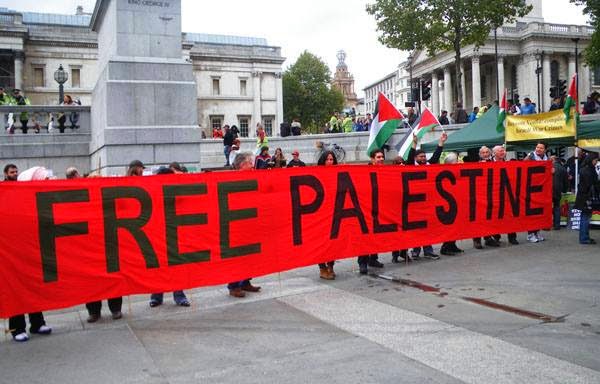
Free Palestine

Free Palestine

Friday, August 09, 2013

EID UL FITR MUBARAK FROM MOLEZ BLOG

Wishing everyone a very Happy 
Eid Ul Fitr Mubarak


ABOUT ZAKAT - E - FITRA

Notes Compiled by Yusuf Kermalli – E-mail: ykabana@gmail.com

(The numbered rulings are according to the Fatawa of Ayatullah Al-Udhma Seyyid Ali Al-Husaini Seestani, Dama Dhilluhu).

(The rulings in brackets are according to the Fatawa ofAyatullah Al-Udhma Seyyid Abulqassim Al-Khui, Ridhwanullahi Alayhi)

01) The obligatory amount of Fitrah is one Sä’ which is 4 Mudd; 1 Mudd is equal to about three- quarters of a kilogram. So oneSä’ is equal to 3 kilograms (about 6.6 pounds).

02) Payment of Fitrah becomes Wajib (obligatory) after sunset on the eve of Eid-ul-Fitr on a person who is:

· Baligh (attained puberty),

· Aqil (sane),

· Is not needy, not poor,

· not unconscious

for himself and all his dependants wherever and whoever they are irrespective of age & belief. For those who pray Salatul Eid, it is Ehtiyat Wajib to give the Fitrah before the Eid prayers and for those not praying Salatul Eid the time extends up to beforeDhuhr. 

NOTE 1: If a person spends money on someone which is sufficient for his maintenance that is not enough to consider him as one of his dependants. Dependants are required to be under his care for their livelihood.

NOTE 2: If a person is a dependant of two people, his Fitrah is obligatory on both by being divided between them.

NOTE 3: If the Fitrah of a person is obligatory on another person, it is not obligatory on him to give his Fitrah himself.

NOTE 4: If it is obligatory on a person to pay the Fitrah of another person, his obligation will not end if the latter himself pays his own Fitrah


03) For the purpose of Fitrah, dependants include guests who are present at the host’s house at the time of sunset on the eve ofEid-ul-Fitrah. However, if a guest comes without the consent of the host, his Fitrah becomes Wajib upon the host on the basis ofEhtiyat Wajib (obligatory precaution). This ruling also applies to a person who is forcibly made to maintain another person. But if he invites a person for Iftar on the night of Eid, he is not one of his dependants and his Fitrah is not obligatory on the person who invited him. 

(Ehtiyat Mustahab to pay for uninvited guest or one forcibly maintained.)

04) On the basis of obligatory precaution (Ehtiyat Wajib), one should not give Fitrah from that food which is not staple in his place (town or city), even if it be wheat, barley, dates or raisins. In other words, the article of Fitrah should be the common food of the people of the town normally eaten by them, even if it is not the only thing that they eat. This is regardless of whether it is from the four categories (wheat, barley, dates and raisins) or from other than them such as rice and maize.

(Staple food has not been made a condition).

NOTE: It is sufficient if payment is made in cash instead of food.


DISBURSEMENT OF FITRAH

05) Fitrah is given to a needy person who, according to the Shari’a is a Faqeer, that is, a person who is not able to meet his living expenses for himself and for his dependants for one whole year, nor does he possess the means to earn a livelihood for himself and his dependants. 

NOTE 1: It is Ehtiyat Wajib that Fitrah is given to a Faqeer who is a Shia Ithna Asheri.

(Ehtiyat Mustahab to give to a Shia Ithna-Asheri Faqeer.)

NOTE 2: The Faqeer to whom Fitrah is given need not necessarily be Adil, but it is Ehtiyat Wajib that Fitrah should not be given to a person who drinks liquor, or one who does not perform his daily Salaat or one who commits sins openly or one who will use the Fitrah in a sinful way.

NOTE 3: The essential factor is the value at the time of the payment, not at the time of the obligation, and the country in which Fitrah is paid, not the country of the person on whom the obligation is due. 

06) A non-Seyyid cannot give Fitrah to a Seyyid even if he maintains a Seyyid and pays his Fitrah. 

07) It is recommended to give preference to one’s relatives when giving Fitrah, then to the neighbors and then Ahlul Ilm (people of learning).

08) It is necessary to have the intention (niyyah) of giving Fitrah to fulfill God’s obligation and for His pleasure only.

09) If one does not give out or set aside the Fitrah within the due time, he should give the Fitrah later, on the basis of precaution, without making the Niyyah of Ada or Qadha but only the Niyyah of Qurbatan Ilallah.

MISCELLANEOUS 

10) If a center or a person knows of someone needy in their city, it is not religiously allowed to send the Zakat-ul-Fitrah to feed the poor out of that city. Reference: Minhajul-Saliheem, Book 1, page 383. Year 2001. Mas'ala #1182 (Imam Mahdi Association of Marjaeya) 

11) It is Ehtiyat Mustahab (recommended precaution) that a Faqeer be given a minimum of one full Fitrah. More can be given to one person also. (Ehtiyat Wajib to give a minimum of one full Fitrah to a person). 

12) If a worker is employed and the employer agrees to maintain him/her fully, then the servant’s Fitrah becomes Wajib upon the employer. But if the agreement is the payment of salary only, then his/her Fitrah is not Wajib upon the employer. 

13) If the price of one type of grain is double of the other, one cannot give half the measure of the better grain nor its cash value as Fitrah.

14) An item set aside for Fitrah cannot be used or substituted by another item. 

15) On the basis of Ehtiyat Wajib, Fitrah should not be sent outside the town one resides in if there are deserving people in that town.

16) Fitrah cannot be given before the month of Ramadhan and it is better not to give it during the month of Ramadhan. However, if a loan was given to a person who deserves to receive Fitrah, then when the Fitrah becomes due that amount can be set off against the Fitrah. 

17) If Fitrah is given from a thing which is inferior or defective, it will not be sufficient.


FAQ on Zakāt al-Fitrah (Revised Ramadān 1434/August 2013)

Q. What is Zakāt al-Fitrah?

A: It is religious tax/alms (zakāt) paid on the day when Muslims break (fatar) the fasting period at the end of the month of Ramadān. This tax/alms is known as Zakāt al-Fitrah.

Q. What do the Qur’an and Hadith say about Zakāt al-Fitrah?

A: Imams  say that one of the applications of the verses: Indeed whosoever purifies himself shall achieve success, and remembers (glorifies) the Name of his Lord and prays (Q 87:14 & 15) is in regards to the Zakā al-Fitrah and saying prayers on Eidul Fitr. Imam al-Sādiq  said: for your fasting to be accepted, give zakāt.

Q. When does Zakā al-Fitrah become wājib (obligatory)?

A. Payment of Zakā al-Fitrah becomes wāib (obligatory) after sunset on the eve of Eidul Fitr. The Zakā al-Fitrah should be paid or set aside at the latest by the day of Eidul Fitr before Eid prayers for those who will perform the prayers, or before midday (the time of zuhr prayers) for those who will not perform Eid prayers. It is necessary to have an obligatory intention (niyyah) of giving Zakā al-Fitrah to fulfill God’s command and for His pleasure only.

Q. What happens if someone forgets or does not give Zakā al-Fitrah on time?

A. If one does not give out or set aside the Zakā al-Fitrah within the due time, he should give the Zakā al-Fitrah later, on the basis of precaution, without making the niyyah of adā(i.e. giving it on time) or qadhā(i.e. giving it after the time has elapsed) but give with the intention of Qurbatan Ilallāhonly.

Q. Can we give Zakā al-Fitrah in advance?

A. You can give the Zakā al-Fitrah anytime during the month of Ramadā before the night of Eid but then it’s mustahab to first give it as a loan and to then change your intention from it being a "loan" to "Zakā al-Fitrah" when the time has arrived to give the Zakā.

Giving the Zakā with the intention of it being the Zakā al-Fitrah prior to the month of Ramadā is not permissible. However, you can send the appropriate Academy for Learning Islam 2 FAQ on Zakat al-Fitrah 1434

amount as a temporary loan to the needy and then change your intention as described in the previous paragraph.

Q. Who has to give the Zakā al-Fitrah?

A. Every Muslim who is mature (bāligh), sane, financially able (meaning that they have means of supporting themselves and their dependents for the following year through savings and/or means of earning), and conscious on the eve of Eidul Fitr. Zakā al-Fitrah should be paid on behalf of one’s self and all dependents (e.g. wife, children) whom one supports financially.

Q: What if I’m dependent on someone who isn’t going to give Zakā al-Fitrah on my behalf?

A. If you are a dependent on someone else for whom giving Zakā al-Fitrah is wāib, but that person does not give it either out of forgetfulness or out of disobedience, it is ihtiyā wājib for you to give the Zakā al-Fitrah for yourself if the conditions are in place for it to be obligatory on you.

Q. Can I give Zakā al-Fitrah on behalf of others who are not my dependents?

A. You can offer them the required amount for them to then give to the needy. You can also distribute it on their behalf or give it to an agent to do so but only if they request you to do so.

Q. What happens if we invite guests for a meal on the eve of Eidul Fitr?

A. If the guest is not considered to be your "dependent" – for example, when the guest is just invited for iftā on the night of Eid - his fitrah is not obligatory on you.

Q. What happens if my guest is considered to be a dependent?

A. If your guest is staying with you in a way that he is considered a "dependent" – even if it be for a temporary period, and even if he was not invited – then: if the guest arrives before sunset to stay at least through the night, it’s wajib on you to give the Zakā al-Fitrah for him. But if he arrives after sunset to stay at least through the night, it is ihtiyā wāib to give his Zakā.

Q. What should be given as Zakā al-Fitrah? Academy for Learning Islam 3 FAQ on Zakat al-Fitrah 1434

A. Three kilograms (one sāa) of any local food staple (like wheat) per person or dependent. Note that an item that is not considered to be staple food locally should not be given as Zakā al-Fitrah.

Q. Can we give cash value of any commodity mentioned above?

A. Yes. For example, if wheat is a local staple and it costs $2/kg., the cash value of Zakā al-Fitrah based on wheat per person would be $6 and one who has three dependents would give $24 ($6 for himself and $18 for each of his 3 dependents).

Q. To whom should we give the Zakā al-Fitrah?

A. Needy locals who are unable to meet their own or their dependents annual living expenses through their savings or through earning. Such needy must be Shi‘ah Ithnā‘Asharī, unless none are to be found, in which case it may be given to any needy local Muslims. Only after searching and not finding needy locals may it be transferred outside of the city. The one exception is when remitting it to the Marj‘a in which case sending it outside is allowed.

Q. To whom should the Zakā al-Fitrah not be given?

A. One who consumes alcohol, does not say his daily prayers (salāt), and commits sins openly; and to one who will use it (directly or indirectly) in a sinful manner.

Q. Can we appoint an agent (like our local center’s administration) to distribute the Zakā on our behalf?

A. Yes, if you have trust that this agent will distribute it to those who are deserving.

Q. Are there any additional rules that we need to be aware of when giving the Zakā al-Fitrah?

(i) Zakā al-Fitrah given by a non-Sayyid cannot be given to a needy Sayyid, but the reverse is permissible.

(ii) Amongst the needy in town, (non-dependant) relatives and neighbors should be preferred over others when giving Zakā al-Fitrah, and those possessing knowledge, commitment to the religion, and merit should be given preference over others. Academy for Learning Islam 4 FAQ on Zakat al-Fitrah 1434

NOTE: These rulings are according to the fatāāof Āatullā Sayyid Ali al-Husaynīal-Sītānī(dz). Please feel free to make necessary changes according to the opinion of your Marja‘ al-Taqlī.


Distributed by: Academy for Learning Islam,. director@academyofislam.com;
Checked by: Shaykh Salim Yusufali, Qum al-Muqaddas.
Toronto, Canada. Tel: 647-738-6179 29 Ramadan 1434/ 7 August

Tuesday, July 30, 2013

21ST RAMADHAN : SHIA MUSLIMS ARE COMMEMORATING MARTYRDOM ANNIVERSARY OF THE FIRST IMAM OF SHIA MUSLIMS

Shia Muslims are commemorating the anniversary of the martyrdom of the first Imam of Shia Muslims, Imam Ali bin Abi Talib (peace be upon him).

A view of the holy shrine of Imam Ali (peace be upon him), in Najaf, Iraq

Imam Ali (PBUH), whom Prophet Muhammad (PBUH) declared as “Amir al-Mo’menin” (The Leader of the Faithful) was martyred on the twenty-first day of Ramadan over thirteen centuries ago. 

The first Imam of Shia Muslims was saying his prayers two days prior to his martyrdom when assassin ibn Muljim hit him in the head with a poisoned sword in the Mosque of Kufa. 

Imam Ali (PBUH) was Prophet Muhammad (PBUH)’s highly revered son-in-law and cousin as well as the first Imam of Shia Islam. He was the leader of the Islamic Caliphate at the time of his assassination. 

The night before his passing is considered the second of the three holy nights - each being known as Laylat al-Qadr (the Night of Destiny). Muslims throughout the world spend the nights worshipping God. 

The martyrdom anniversary of Imam Ali is commemorated by Shia Muslims around the world.

Saturday, July 20, 2013

FORGIVE AND FORGET - MONTH OF FORGIVENESS - HOLY MONTH OF RAMADHAN - Article by Madiha Zaidi

Forgive & Forget


It's that time again: the month of forgiveness, the month of blessings, the month of Ramadhan. We are constantly told that this is the special month in which Allah has invited us to beseech His forgiveness for all of our wrong actions and that we will be forgiven. How awesome is that? We have a whole month to cleanse out our past year of slips and mistakes, and Allah is going to be cool with us! He really is Merciful. It is a shame that we cannot take those qualities into our own lives.

We are told that one who knows himself knows his Lord. And when one begins to know himself and his Lord, in which we can refer to His 99 names, one begins to adopt those qualities in his/her life. For example, if a person begins to know himself and his/her stance, or "level of", generosity, introspection will allow the person to realize how beautiful a characteristic generosity is, as we see in the Grace of Allah.

Imam Ja'far as-Sadiq (peace be upon him) says in Lantern of the Path, "'They should pardon and turn away. Do you not love that Allah should forgive you? And Allah is forgiving, merciful.' (24:22) If you do not pardon another mortal like yourself, how can you hope for the pardon of the Compelling King?"

Whether it is personal, family, or communal, grudges hold us back from so much progress. Forgiving someone, and being able to reunite, is a fight against the ego. When we do not feel like, or are not willing to forgive someone, we are placing ourselves very high above. If Allah forgives His creations for their every mistake, how can we not forgive our own brother or sister for a mistake against us? Are we comparing, or placing, ourselves on the same level as Him? I will never forget our Sunday school shirt one year. On the back in bold letters it said, "God Gives and Forgives, Man Gets and Forgets." It's true, isn't it? We forget who we really are sometimes, or think we're something we are not.

Of course it is a hard process, but doing good things always has to be forced. Naturally, it is hard for someone to let go of the pain they are feeling due to someone else's slip, mistake, or misunderstanding. The reasons are many, but we all know it is the right thing to do. It is what will prepare us for bigger trials and tribulations. For if we lose our brothers and sisters over minute infractions, mishaps, and situations, we do not understand the true message that Ashura has left us.

We need to be able to see the bigger picture. The stronger our ties are with our brothers and sisters, the stronger our communities and, insha'Allah, our Ummah. If we continue to hold grudges, spite, and dislike for our own people, whatever the reason, it will take us a long, long time to get anywhere as a progressing Ummah which will spread and teach Islam around the world.

Sometimes it is better to look at it in a different light. Instead of thinking "they hurt me so bad, how can I forgive them?", we need to think of it in a manner as to why did the situation occur. This will then allow us to go back to the narration which states: "Ubayy ibn Ka'b said, 'When you see a quality which you disapprove of in one of your brothers, then give it seventy interpretations and see if your heart can be at peace with one of them. If it is not, then blame yourself if you cannot excuse him. If you yourself have a quality which will easily make for seventy interpretations, then you should disapprove of yourself more than you do of him.'" (Excerpt from Lantern of the Path, "On Pardon")

Seventy excuses! Wow. Let us all think back to how often we have done so. My point being, that instead of crying "poor old me", and thinking "why would my own brother/sister do this to me", will create a thought process in which we begin to realize that everyone is human, everyone makes mistakes, and we are in this world to make it a better place, not to dislike each other. There really are bigger fish to fry!

Insha'Allah in this blessed month, but not only in this month, we will take the time to sit back, look at ourselves, and also try our best to be patient and strong when it comes to our situations and scuffles.
Forgiveness: one small step for you, one huge step for the Ummah – be the first!
 

Author of this article: Madiha Zaidi 

Thursday, July 04, 2013

REMARKS BY PRESIDENT OBAMA AT BUSINESS LEADERS FORUM - HYATT KILIMANJARO, DAR ES SALAAM, TANZANIA


Hyatt Kilimanjaro
Dar es Salaam, Tanzania

July 01 2013
7:30 P.M. EAT


PRESIDENT OBAMA: Thank you. (Applause.) Please have a seat. I apologize that we were a little bit late, but some of your colleagues had many things to say, and they were all extremely valuable. And I wanted to spend at least as much time listening as I was speaking.

Let me begin by expressing our gratitude to President Kikwete and the people of Dar es Salaam and Tanzania for their incredible hospitality. Thank you to our hosts -- the Corporate Council on Africa -- for bringing us here together. I want to acknowledge the Secretary General of the East African Community, Richard Sezibera; and the President of the African Development Bank, Donald Kaberuka. I want to thank both of them for their incredible leadership. So please give them a round of applause. (Applause.) 

I want to welcome all of you who have come from across the region -- Kenya, Uganda, Rwanda, Burundi -- and beyond, including the United States. 

I’m pleased to be joined by leaders from across my administration, including my new U.S. Trade Representative, Mike Froman. Mike, where are you? Stand up so everyone knows. (Applause.) Because Mike will be very busy working to increase trade and commerce between the United States and Africa. We’ve also got USAID Administrator Raj Shah. (Applause.) We’ve got a son of Ethiopia who achieved great success in America and now leads our Millennium Challenge Corporation, Daniel Yohannes. (Applause.) And President of the Export/Import Bank, Fred Hochberg. (Applause.) Director of U.S. Trade and Development Agency, Lee Zak. (Applause.) And our Executive Vice President of OPIC, Mimi Alemayehou. (Applause.) 

Now, we just had an opportunity to have a terrific conversation with some of you about what we can be doing together -- investment between our countries and economic growth here in Africa. And that’s what I want to just speak on briefly today.

This is the final leg of my visit to Africa. And at every stop, one of my main messages has been that, even as this continent faces great challenges, this is also a moment of great promise for Africa. And it’s a tribute to the extraordinary drive, and talents, and determination of Africans all across the continent. So, yesterday, in Cape Town, I said that I believe this creates opportunities for a new kind of relationship between the United States and Africa -- a partnership rooted in equality and shared interests. And it starts by building on the progress that we’re seeing and empowering Africans to access even greater economic opportunity. 

And that’s a worthy goal in its own right, but I’m also here because, in our global economy, our fortunes are linked like never before. So more growth and opportunity in Africa can mean more growth and opportunity in the United States. And this is not charity; this is self-interest. And that’s why a key element of my engagement with Africa, and a key focus during this trip, has been to promote trade and investment that can create jobs on both sides of the Atlantic. And I believe we can accomplish that, because we’ve got an enormous opportunity to unleash the next era of African growth. And many of you know it better than I because you’re at the forefront of it. 

Africa is home to many of the world’s fastest-growing economies. Sectors like retail, telecom and manufacturing are gaining speed. And here in East Africa, over a decade, the region’s economy quadrupled. The world is investing in Africa like never before. In fact, we’re close to reaching a historic milestone where foreign aid to Africa is surpassed by foreign investment in Africa. And that’s great news.

And that growth is changing lives. Poverty rates are coming down. Incomes are going up. More Africans are joining a growing middle class. African consumers are spending more and creating new markets where we can all sell our goods. 

So I see Africa as the world’s next major economic success story. And the United States wants to be a partner in that success. That’s why OPIC has tripled its investments in Africa, from hospitals in Ghana to biomass power generation right here in Tanzania. We launched a campaign to encourage more American companies to do business here. And we’ve increased the value of our financing and support for trade and investment dramatically -- to more than $7 billion.

And we’ve seen progress. Over the past decade, under the African Growth and Opportunity Act, African exports to the U.S. have surged, and support jobs across the continent. Our exports to Africa have tripled -- with Caterpillar, for example, from my home state of Illinois, selling mining trucks to Mozambique. Boeing is selling airplanes to Kenya -- Kenya Airways. American-made solar-powered water treatment systems sold in Senegal and Cameroon, they’re supporting jobs back in Pennsylvania. 

So we’re making progress, but we’re here because we know there’s a lot more work that has to be done. There’s a lot of untapped potential. The entire GDP of sub-Saharan Africa is still less than $2 trillion -- which is about the same as Italy. Our entire trade with Africa is about the same as our trade with Brazil or South Korea -- countries with a fraction of Africa’s population. Of all our exports to the world, only about two percent goes to Africa. So I know we could be doing much more together. And let me suggest a few ways where we can make progress.

First, to keep our trade growing, we need to renew AGOA. But we’ve also got to make some decisions about how we can make it more effective. Today, the vast majority of our trade with Africa is with just three countries -- South Africa, Nigeria and Angola. We need to broaden that. We need to make sure more Africans are taking advantage of the opportunity to export to the United States. And one of the best ways to do that is to make sure more African goods can compete in the global marketplace. And that means more opportunities for small and medium-sized companies, and entrepreneurs, and merchants and farmers, including women. And so I’m pleased that Mike Froman will kick off this process at the next AGOA Forum next month in Addis.

But let me be candid -- improving AGOA is not going to be enough. The real answer to unlocking the next era of African growth is not in Washington, it’s here in Africa. And during the discussion with business leaders, we've got some terrific ideas about how we can release that energy. 

First of all, African governments are going to have to take the lead -- not because the United States says so, but because that’s what works best. And for those willing to do the hard work of the necessary reforms to create a vibrant market economy and business environment, the United States is going to be a steady and eager partner.

So, for example, the vast majority of Africans working in agriculture, that’s potential that has not been fully tapped. So we need country-led plans that can attract private capital so we’re boosting the income of small farmers, which can fuel broad-based economic growth and lift 50 million Africans from poverty, putting some money in the pockets of the agricultural sector -- small farmers, small shareholders. Suddenly, you've got customers for a whole range of products, and that gives additional opportunities for African manufacturers or telecom companies or insurance. Tidjane, he always wants me to talk about insurance. (Laughter.) 

For the overwhelming number of Africans who are young, we've got to make sure they've got skills and the networks and the capital to realize their ambitions. So that’s one of the reasons I'm announcing the expansion of my Young African Leaders Initiative, so we’re investing in the next generation of African leaders in government and non-profits, but also in business. 

We know that it has to become easier to do business in Africa. This is something that we had extensive conversations about, and all of you know this better than anyone -- you've figured out how to work around the constraints, but we need to tear down these constraints. It still takes way too long -- too many documents, too much bureaucracy -- just to start a business, to build a new facility, to start exporting. And one of the useful comments that came during our discussion is, if we're going to, for example, build a lot of power around Africa, we can't have a seven-year timeframe for building a power plant. We've got to move. Things have to go faster. And government can have an impact on that -- for good or for ill.

So as part of our partnership for growth, we're working with countries like Tanzania and Ghana to make sure rules and regulations are encouraging investment, not scaring it away. And, by the way, if we can synchronize regionally between countries so that there is some standardization of how business gets done, that’s helpful too, because then people don’t have to try to figure out and unlock a different bureaucracy and a different system, different paperwork for even the most routine tasks. 

We know that strengthening good governance is good business as well -- and this is something that I've been emphasizing throughout my tour with leaders and with citizens in Senegal and South Africa, and now in Tanzania. No one should have to pay a bribe to start a business or ship their goods. You should have to hire somebody's cousin who doesn’t come to work just to get your job -- get your business done. You shouldn’t have to do that. (Applause.) 

So as part of our global effort against corruption, we're working with countries across Africa to improve governance, enhance open government, uphold the rule of law. Because trade will flow where rules are predictable and investment is protected.

We also know that unleashing Africa's economic potential demands more access to electricity. That’s how businesses keep the light on. That’s how communities can literally connect to the global economy. And more than two-thirds of the people in sub-Saharan Africa have no access to electricity, even as Africa's potential to produce energy is vast. And that’s unacceptable in 2013. 

So that’s why, yesterday, I announced Power Africa -- our initiative to double access to electricity in sub-Saharan Africa. I want to thank the African Development Bank for its partnership, as well as many companies that have stepped up with commitments, including some here. And I have to say, those who are involved in this process, they continually tell us the problem is not going to be private-sector financing. The problem is going to be getting the rules right, creating the framework whereby we can build to scale rapidly. That's what we're committed to doing. 

We’re starting with countries that are making progress already with reforms in the energy sector -- Tanzania, Ethiopia, Kenya, Nigeria, Ghana, Uganda, Mozambique and Liberia. And with a focus on cleaner energy, we will initially add 10,000 megawatts of new electricity generation, which expands electricity to 20 million homes and businesses.

We also know that many of the greatest opportunities for growth are often in markets right next door, right across the border. But if it's easier for you to sell to Europe than it is the folks right next door, we've got a problem. That's a constraint on Africa development and growth. So here in East Africa, by reducing tariffs and pursuing a customs union, you’ve doubled trade between your countries in recent years. But we've got to keep working. It should not take longer to ship products between African countries than it does to ship to Europe. A company like Ford shouldn't have to transport cars to Kenya from South Africa by airplane because it's so expensive or unreliable to do it by road or by rail. So you've got to create a situation which is easier to trade within Africa. 

So today, I’m announcing a new initiative -- Trade Africa -- to boost trade with and within Africa, starting with the East African Community. (Applause.) And as part of this effort, we’ll negotiate a regional investment treaty with the EAC. We’ll launch a new program to facilitate trade by focusing on moving goods across borders faster and cheaper. We’ll work with the countries involved to modernize customs, move to single more efficient border crossings, reduce bottlenecks, reduce the roadblocks that stymie the flow of goods to market.

And we’re focused on specific goals. So moving goods faster between ports like Dar es Salaam and Mombasa to Burundi and Rwanda in the interior; or reducing the wait times that truckers endure at the border; increasing East African exports to the United States under AGOA by 40 percent and not simply increasing trade within East Africa -- doubling it. That’s our aim. Those are the goals we're setting for ourselves under Trade Africa and here in East Africa. And we intend to be -- we intend this to be the foundation for similar progress regionally that we can do across the continent in years to come.

And, finally, we’re going to sustain our efforts. I’m making this trip early in my second term, because I intend for this to be the beginning of a new level of economic engagement with Africa. So I’m announcing today that my new Commerce Secretary, Penny Pritzker, will lead a major trade mission to Africa in her first year. My Treasury Secretary and my Energy Secretary will come to the region as well. We will bring American investors and businesses together in a major conference on doing business in Africa. Other American trade missions next year will focus on forging new partnerships in agriculture and energy and infrastructure. So, across the board, we want to step up our game.

And the bottom line is this: I want to make sure we’re doing everything we can to encourage the new growth we’re seeing across Africa, and more trade between our countries. And that’s what your companies represent. That’s what the incredible young men and women from across Africa who I met at our town hall in Soweto represent. I was hearing their stories and the impact they’re already having, and listening to their hopes and seeing their determination to build their lives and their communities and their countries. And it just reinforced everything I believe about Africa and its people. 

If people across this continent are just given a chance, if they're just empowered with the skills and the resources and the capital -- and government is accelerating and advancing their opportunities as opposed to it being an impediment -- they can achieve extraordinary progress. And that’s what I believe. And I know that's what you believe. 

And that's why the United States is going to keep investing in efforts that unleash that potential and its greatest natural resource, which is its citizens. When we do, I'm absolutely convinced it won’t just mean more growth and opportunity for Africa, it will mean greater prosperity for the United States and indeed the world. So thank you very much for participating. I appreciate it. (Applause.) 


END
7:50 P.M. EA