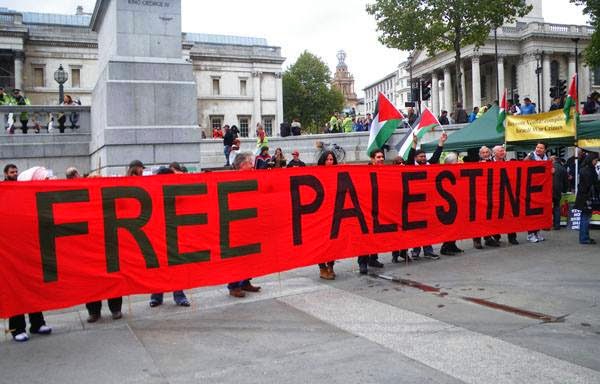
Free Palestine

Free Palestine

Friday, November 16, 2012

MUHARRAM, KERBALA & IMAM HUSSAIN (AS)

Muharram, Kerbala & Imam Hussain (as)

EVENT & PERSONALITIES

Imam Hussain was the grandson of the Holy Prophet Muhammad, through his daughter, Lady Fatima and son-in-law, Imam Ali, peace be upon them all. 

In less than half a day on the 10th of Muharram ( Ashura) in the year 680 A.D. (61 A.H.), on the hot desert sands of Karbala in Iraq, Imam Hussain(as), and 72 of his family members, friends and followers, including his 6 month old infant son, were martyred under most gruesome circumstances. These included His brother Hazrat Abbas (as) the standard bearer, His young 18 yr old son Ali Akber & his 4 year old daughter Sakina who died while in prison in Damascus. The Oppressive ruler; Yazid son of Mu'awiya son of Abu Sufiyan & his very large army of over 30,000 men, committed these heinous crimes against the small group which included the household of the Prophet. Lady Zainub (sister of Imam Hussain) also played a key role especially subsequent to the battle to inform people of the truth.


The group, including the six-month infant Ali Asgar, was without food and water for 3 days before their martyrdom. Ali Asgar was martyred thirsty in his father's arms when his tender throat was pierced by a three-pointed poisoned arrow, while his father implored the tyrants to allow water to the infant, after all his other companions were martyred at their hands.

Imam Hussain resolved to defend his thirsty entourage from the killer army’s onslaught, rather than submit to their forcible extraction of allegiance to a criminal despotic regime which used the name of Islam. He was going to stand to his principle to defend True Islam, even though he might be the last man standing with no support, no help.

The martyrs were beheaded & their heads were put on spears, while their corpses were trampled upon and left unburied. The ordeal did not stop at this as the women and children in the Imam's entourage were held captives and tortured while being led on an arduous journey to Damascus to be paraded and later imprisoned . The only male survivor was Imam Zainul Abideen (as) son of Imam Hussain (as) who was ill at that time, yet chained & repeatedly beaten. He subsequently wrote a 'Treatise on Rights' & a monumental prayer book called Sahifa Kamila ( see www.Duas.org)

In the history of Islam, al‑Husayn ibn 'Ali, the martyr of Karbala, wrote one of the most brilliant chapters; a chapter which still and after more than fourteen centuries, echoes in the minds and hearts of Muslims everywhere. It is remarked by a modern Muslim writer that 'With every Karbala Islam is renewed'.

Edward Gibbon (1737-1794) considered the greatest British historian of his time. Wrote “In a distant age and climate the tragic scene of the death of Hussein will awaken the sympathy of the coldest reader." [The Decline and Fall of the Roman Empire, London, 1911, volume 5, pp. 391-2] 

Each year during the first Islamic month of Moharram and upto 40 days (Arbaeen) thereafter, mourning sessions are held all over the world, wherein the trials and tribulations of these martyrs are recounted, mourned and lamented, while expounding the values and teachings upheld by them. These practices are an institution in themselves and are being continuously held for the past 14 centuries. 

The Martyrdom is unique and unparalleled in a number of ways, the most obvious of all being its sacrifices from - men, women and children of all age groups, every conceivable human relationship, rich and poor, noblemen and slaves, military commanders and commoners, and individuals coming from different specters of human society.

REASONS 

Imam Hussain(as), his family and friends sacrificed everything ( life ,wealth, family honor) that they had ,in their struggle against tyranny and despotism and for upholding the human values of truth, justice and liberty of thought, word and deed. Their struggle was aimed at the ultimate goal of awakening human beings of all times to uplift the human spirit beyond short-sighted materialistic pursuits, and establish a just and equitable order in society. 

Imam Hussain wrote a will and handed it over to his brother Muhammad Hanafiyyah. The will read, ‘’I have not risen against Yazid in order to create corruption or discord, nor to elevate myself in the eyes of the people, nor to oppress.’’ Innama kharajtu litalabil islahi fi ummati jaddi wa abi’’ I have only risen to rectify, to reform the affairs of the Ummah of my grandfather and of my father. ‘’Uridu ‘an aamura bil ma’ruf wa anha ‘anil munkar.’’ I want to invite people towards good and forbid them from evil.’’ 

Yazid the oppressive ruler openly indulged in sinful activities like drinking, womanizing, terrorizing /killing innocent people, making fun of scholars etc & yet claimed to be rightful successor /leader of Islam & the Muslim ummah. The silent majority scared and terrified by the overflowing military might and power, did nothing about this. 

Yazid demanded that Imam Hussain (as) pay allegiance (bay'aa) to him. When asked to give bay’aa to Yazid, Imam Hussain said, ‘’ We are the household of the prophet hood, the source of messengership, the descending place of the angels, through us Allah had begun showering His favours, whereas Yazid is a sinful person, a drunkard, the killer of innocent people and one who openly indulges in sinful acts. ‘Mithli la yubayi’u mithlah’. A person like me can never do bay’aa(pay allegiance) to a person like him (Yazid). I look upon death as but the felicity of martyrdom and I regard life among oppressors and transgressors as nothing but agony and torture. By God I will never give you my hand like a man who has been defeated; nor will I flee like a slave.’’

He rejected the rule of a man who was generally agreed not to have been fit to rule. In this sense he was a revolutionary, as indeed he is now regarded by contemporary writers.

EFFECTS 

The event is of great significance because of what this martyrdom meant for the religion of Islam in exposing the wrong and upholding the right through the sharp contrast between him and his followers on the one hand and his antagonists on the other.

Mahatma Gandhi in 1924 writing in ‘Young India’’ about the battle of Karbala said among other things ‘’ I wanted to know the best of the life of one who holds today an undisputed sway over the hearts of millions of mankind….the utter self-effacement of Hussain, his fearlessness, his absolute trust in God and in his own mission to save Islam.’’

The Martyrdom has also prompted a vast body of literature in a multitude of languages all over the world, a phenomenon that continues to this day. Outstanding examples of this are the elegies written by Mir Anis, one of which holds the world record for the longest verse for the past two centuries. 

The largest gathering on the face of the earth since time began now occurs in Karbala in Iraq on Arbaeen ( 20 safar) where over 10 million pilgrims visit the shrine. 

Imam Hussain embodied in himself magnificent qualities - wisdom, knowledge, leadership, patience, humility, forbearance and total submission to the Almighty, to name a few - and his life is a source of inspiration and a role model for all generations to condemn all forms of oppression & Injustice.


Source: www.duas.org

HUSSAIN, THE UNIVERSAL LEADER


It is in the very nature of great reformers that they belong to everybody, everywhere.
Hussain’s noble deed is so relevant to the entire human race that I am sure there is a far bigger audience waiting for him somewhere than the one he already has. All that is required is to draw people’s attention.

Contemporary society, irrespective of race and religion, would do well to have a closer look at the Hero of Kerbala as his message transcends the barriers of caste creed, race and religion. Advocates of human rights, sociologists, reformers, theologians, all included, will find “delightful wisdom, sweet instructions, and a meaning suited to their mind”, in his story. His message is certainly not an exclusive preserve of any particular group. It embraces the entire human race. It was not a power struggle. Hussain persistently and explicitly expounded;what matters to me is to “correct not conquer” – An affirmation that he would die in the firm belief that a despot’s idiosyncrasies could never be an effective instrument of religious policies.

Yazid became too big for his boots and assumed the characteristics of a despot who, almost as a condition of his position, made boastful and frivolous claims that he alone could lead the nation
Hussain was, however, committed to redeeming Islam and maintaining the faith intact.

He hoped that matters would improve and kept a low profile to preserve amity. He had a clear choice: stand aside and let Yazid act according to his whims; (and thus join in and implicitly justify his abominable escapades) or counter his devious bluster. Hussain had to decide: to take the situation in its stride as a price worth paying for the “status quo”; or view it as an ominous foretaste of the consequences of the extensive damage done by the far-reaching anti-Islamic activities of Yazid, the mammon of unrighteousness, whose lust for power prompted him to beat the nation into the mould he favoured. He and his profane crew conspired to scuttle the ship of Islam by worse than heinous deeds, violating the aims for which Islam was born.

Hussain had no desire to live under such a corrupt Caliph. He wanted to act as quietly and as “spontaneously” as possible so as to limit the possibilities of an open clash with the Caliph. But Yazid bargained hard. Hussain could not take his effervescent nonsense perpetually and did what was right.
If the moral standards of human behaviour were as high as they were in the person of Hussain the world would be a better place to live in, is the obvious inference. His incredible cool and superhuman moral courage to achieve his mission stirs our deepest emotions. His exemplary conduct, throughout, and adorable conscience tore Yazid’s monstrous designs to shreds.

The virtuous people will continue to do their duty to maintain righteousness in this world and in this they are entitled to universal recognition and support.

Hussain’s acceptance of persecution in the cause of humanity was most convincing and moving proof of God’s immanence in men. He was a man par excellence who maintained the highest standards set by the martyrs and heroes of all ages. With a courage that was more than human he managed to leave a message for the entire world, “Do not submit to exploitation, of any kind; maintain a tenacious grip on veracity; better die with honour than live in shame”. He surely deserves universal recognition. “He is an immortal heir of universal praise”. More than Fourteen hundred years have passed but the memory of that adorable hero, who resolutely faced the soul-searching trials and tribulations, has not diminished. On the contrary, it has grown in intensity.

Imbued with exemplary fortitude, moral fibre and aplomb, Hussain has emerged as the most revered and meritorious martyr the world has produced, who established the highest standards of excellence of which humanity prides itself.

Shaheed Murtadha Mutahhari

Source: IBNTV

HUSSEIN: SYMBOL OF LOVE AND SACRIFICE


It is usually thought that Islam views God as a heartless Ruler of the world, an angry Judge, and a wrathful Lord who is looking meticulously for a wrongdoer to punish them. For those who have thoughtfully read the Quran only once in their lifetime it is very easy to discard this view beyond any doubt.

However, for those who have not carefully read the Quran, or do not have the necessary means and knowledge to analyse its verses, there stands, in the living memory of the history, an episode which, very clearly, epitomizes the notion of love between the creator and the created, and the sacrifice and suffering that could be endured readily and contentedly by a human being for the sake of the beloved God.

This episode is the event in which Hussain, the grandson of the Prophet of Islam, offered not only his soul and his flesh to the Lord, but that of his sons, his nephews his cousins and his closest friends, and bore the grief of the foreseeable capture of his wife, his daughters and his sisters. This happened on the 10th day of Muharram in a land called Karbala in the year 682 AD.

As the grandson of the Prophet and someone who was very much adored by him, Hussain could have lived a very comfortable and well-heeled life after his grandfather, much honoured and revered by his contemporaries. However, he was devoted to the cause of the Lord, concerned about the guidance that was revealed to his grandfather and eager to make sure that the path of love towards God was not obstructed by voracious, materialistic type of people who had joined Islam only to fulfil their mean and mere worldly ambitions.

And he did well. On one single day he demonstrated a degree of love and sacrifice towards the Lord that could hardly be paralleled by any similar incident in the history of mankind. He loudly cried his dissatisfaction of what was going on in the name of the Lord and with recourse to the authority of his grandfather;a cry that can be heard even today through the long stretched tunnel of history.

Hussain used to say in his supplications:

“My Lord! You are the One who removes all others from the heart of those whom You love, in a manner that they do not love but You, and do not seek refuge from anyone but from you; You are their intimate company when the trials of the world frightens them. My Lord! Those who have lost You, what do they find, and those who have found You, what do they lose?”

Hussain had nothing to loose since he had found a Love that gives life to everything.

By Sheikh Muhammad Saeed Bahmanpour

Source : ibntv

Saturday, November 10, 2012

STATUS OF WOMEN AND FAMILY IN THE OPINION OF IMAM ALI (PBUH)


Woman is a delicate creature with strong emotions who has been created by the Almighty God to shoulder responsibility for educating society and moving toward perfection. God created woman as symbol of His own beauty and to give solace to her partner and her family.

Women’s status in Imam Ali’s (AS) opinion

Due to high importance that Islam attaches to women, there are many recommendations about venerating and respecting women and being kind to them. Islam lauds women and Imam Ali (AS) has quoted Prophet Mohammad (PBUH) as saying that “Nobody respects women but those who are dignified and generous and nobody insults them but those who are mean and contemptible.” In another tradition, Prophet Mohammad (PBUH) appreciates a mother noting, “The entire respect that a child has for his/her mother would not be equal to one day of suffering that she has underwent to bring him/her to this world.”
In pre-Islamic Arab society, people considered no value for women and girls and some tribes even went as far as burying their female infants alive. However, after the advent of Islam, Prophet Mohammad (PBUH) did his best to change women’s status and promote new attitudes toward women. Every time that Prophet Mohammad (PBUH) saw his daughter, Fatemeh (AS), he greatly respected her and kissed her brow. Basically, respect for women is prominent in traditions as well as the conduct of Prophet Mohammad (PBUH) and his progeny. Ali (AS) has been quoted as saying, “Girl is good deed and boy is bounty. Good deeds are rewarded while people are held accountable for bounties.” He has also been quoted as saying that “He who has a daughter will avail of blessing and forgiveness of God.”

A major issue which has been addressed by leaders of Islam is to keep women out of the way of harm, both physical and psychological. In our time, inattention to this issue has caused many women to fall victims to moral and sexual assaults. Anthony Giddens, a Western sociologist, has noted that sexual abuse of women has become ordinary in the West and it also includes working women.

A British journalist has noted that violence against women is escalating in the United States, adding, “Every day a number of women fall victims to violence of their husband or friends and are killed. The violence has dramatically increased after terror attacks of 9/11. It may look strange for a society like the United States, but this is a reality that women continue to be victims of violence as well as moral and administrative corruption or are abused in many ways.”

Imam Ali (AS) enumerates ways to prevent physical as well as psychological damage to women and notes that women can take part in economic, political and social activities while behaving in such a way as to keep off offenders. Imam Ali (AS) advises women to cover their bodies properly when they get out of their homes to shoulder social responsibilities or attend public places.

Although chastity is good for everybody, it is even better for women.

Therefore, Imam Ali (AS) has noted in Epigram 474 of Nahj-ul-Balagha, “The reward given to a combatant killed for the cause of God would not be bigger than the reward of a chaste person who is able to do sin, but stays away from it. Verily, a chaste person is an angel among angels of God.” Today, women in many parts of the world guard their human status in proper ways.

Nadia is older daughter of a British – Asian family who is studying medicine. She has chosen Islamic code of dress and says, “As a woman, I want to remain chaste and modest. Observing hijab (Islamic dress) will protect me against social harm.” She adds, “I am honored to have Imam Ali (AS) and Fatemeh (AS) as my role models.”

Imam Ali (AS) has considered modesty, caution and being calculating as major characteristics of any Muslim woman. It seems that women should be both modest and firm in social encounters because this would prevent evil men to harm them. Imam Ali (AS) has also noted that women should be wise in social interactions to prevent others from exploiting them and look at them as a consumer commodity. Imam Ali (AS) has opined that a Muslim woman should be calculating and protect honor and property of their spouses. Therefore, if a woman is modest, calculating and cautious, she would be able to take constructive and effective steps.

Woman’s status in family

Marriage and family formation is among basic needs of all human beings which will help them prosper. Undoubtedly, relations among family members are important and leave their mark on the society. At present, Western thinkers are concerned about collapse of family institution and growing number of single parent families and are trying to find solutions for this problem. An American researcher has noted that modern families which are not the result of legal marriage lack good resources for upbringing of their children and cannot help shape moral conscience of their offspring. He says that such families are doomed to collapse. Today, 22 percent of children are born out of wedlock, while the figure was only 11 percent in 1970. Therefore the situation is alarming.

Islam attaches great significance to family institution. Men and women are supposed to do their part in social, religious and educational system of families. Imam Ali (AS) has noted that “woman oversees domestic as well as her husband’s affairs.” 
Through good supervision over family, a woman can create a warm and understanding atmosphere and lay suitable grounds for a healthy, vivid and successful family life.

Imam Ali (AS) did his best to make women understand true value of women and know that they need attention and kindness more than anything else and do not deserve to be treated harshly and violently. Imam Ali (AS) has been quoted as saying, “God will not accept prayer and good deeds of a man who harasses his wife and he is among the first people to enter the Hell.”

Imam Ali (AS) has also noted, “every man who is unfair to his family cannot be hoped to do good to others.” In other words, such a person would not be qualified to undertake social responsibilities and cannot even be trusted to manage a family life. Since women are susceptible to emotional upheavals, they should be able to rely on their spouses in such times. At the same time, a woman should give solace and comfort to her man.

Most family problems are due to trouble caused by one of the spouses. Sometimes domestic problems are a result of quibbling over trivial matters or illogical demands on the part of wife or man. Imam Ali (AS) maintains that such demands are detrimental to the marital life and calls on both men and women to love each other and do not ask for something that would end in resentment. During nine years of his marital life with Fatemeh (AS), Imam Ali (AS) had a warm and affectionate relationship to his wife. When he was asked about their marital life, Imam Ali (AS) said, “I bring God as witness that I never made Fatemeh (AS) angry and never made her do anything. Fatemeh (AS) was also like that and she never made me angry and never disobeyed me.”

Since the main goal of marriage is to attain peace of mind and produce offspring, criteria used for choosing one’s spouse should be such that they would guarantee establishment of a lasting family relationship. Imam Ali (AS) has frequently explained about suitable criteria for marriage. One of those criteria is that man and woman who are intent to marry should be similar in social status and rank. They should understand each other and have common ideals and ideas as much as possible so as to supplement each other.

He has advised both men and women to choose a spouse that would match them in status. From the viewpoint of Islam, similar status, religion, culture, and personal characteristics constitute major factors which will cement a marital relationship. Apparent feathers such as intelligence and age may be also taken as additional criteria.

Therefore, to prevent future problems, men and women should pay due attention to each other’s characteristics and select a spouse which matches them more closely. It is through correct selection that one can provide his/her spouse and children with a calm, healthy and productive home environment.

Source: Iran Review

Monday, November 05, 2012

JUSTIN TIMBERLAKE AND JESSICA BIEL SPEND THEIR HONEYMOON IN TANZANIA

TANZANIA is becoming an increasingly popular destination for world's top celebrities following the arrival in the country of a new couple Justin Timberlake and Jessica Biel for honeymoon.


The newlyweds opted to honeymoon among Tanzanian wildlife as the loved-up pair were seen arriving at the Kilimanjaro International airport two days after their nuptials.Justin and Jessica had tied the knot in a romantic week-long extravaganza at the Borgo Egnaza resort in Southern Italy two weeks ago.


Newly-released shots show the blissed-out couple exiting their private plane and boarding a helicopter to the reserve of Singita Grumeti in the world-famous Serengeti Park.Landing in the Sasakwa landing strip on October 21, Jessica covered her famous face with a white cloche hat.The 30-year-old bride also wore a white tank top under a grey cardigan, white trousers, and sensible flats.


Meanwhile, the 31-year-old groom was seen in a hat with matching khakis and a black T-shirt.Justin and Jessica reportedly stayed at the luxurious Sasakwa Lodge. According to the resort's website, each air-conditioned cottage has a heated infinity-edge pool overlooking 'where the land stretches forever'.


The lovebirds are believed to have enjoyed adventurous game drives with professional guides and a picturesque hot air balloon safari across the sprawling plains of the Serengeti.The posh resort also offers activities such as horseback riding, archery, lawn croquet, mountain biking, yoga and tennis.


Five days later, the famous couple reportedly continued their celebration at the riverside Faru-Faru Lodges in the same 350,000-acre preserve before leaving October 30 by helicopter, then boarded a private plane destined for yet another exotic location.Tanzania seems to be one of Biel's favourite tour destinations. She visited Tanzania back in 2010 when she scaled the 19,341 peak of Mount Kilimanjaro after a week-long charity climb alongside Emile Hirsch, Isabel Lucas, Santigold, and Lupe Fiasco for the global clean water crisis.


It's the first marriage for the twosome, who were engaged for 10 months after Justin proposed to Jessica in Big Sky, Montana with a custom-designed ring last December.Celebrity guests of the destination wedding included SNL's Andy Samberg, music producer Timberland and Jessica's 7th Heaven co-star Beverly Mitchell.


It was estimated that the week-long celebrations might have cost the on/off couple, who dated for five years, $10 million.And as Jessica walked down the aisle in her custom pink Giambattista Valli gown, Justin serenaded her with a new original song.'I figured if there was something I was going to be able to offer, it would be to sing her down the aisle,' the crooner told Hello! magazine.

'Grown men were weeping. Hopefully it's because I didn't sound bad.'One celebrity guest who admittedly weeped at their Italian ceremony was talk show host Jimmy Fallon.'It was just insane. Everything was just beautiful. It was really, really a beautiful night, the perfect temperature,' the funnyman revealed on Bravo's Watch What Happens Live.